Creative Detours
Can we help our friends stay on course?

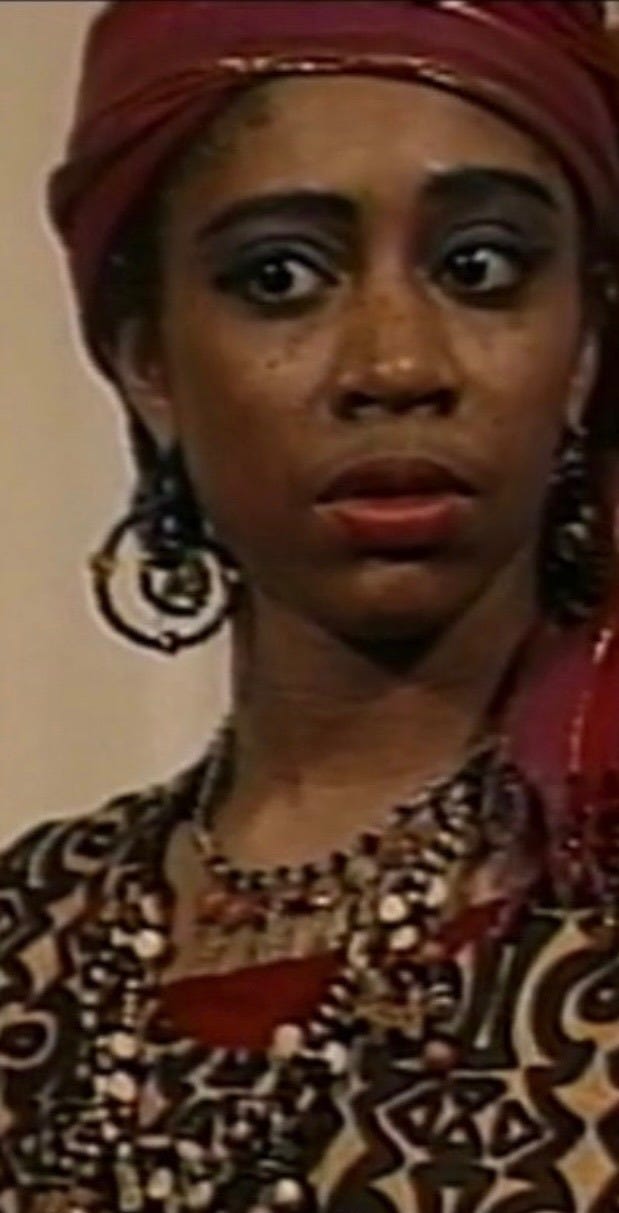
I launched my filmmaking career 34 years ago with an 11-minute short entitled Creative Detours. It tells the story of Michelle, a young woman who moves to New York City from the Midwest in order to “develop her writing”, and to share an apartment with her boyfriend. Distracted by her new creative lifestyle (and the work of being a supportive girlfriend), she’s challenged by her best friend to focus on her own growth as an artist.
The title comes from a quote by groundbreaking filmmaker Kathleen Collins:
“If there is any way in which women tend to be self-destructive it is in the area of creativity where they actually feel their own power and can’t either acknowledge it or…...go to the end of it. They get scared and they retreat into illness or into having too many babies or destructive love affairs with men who run them ragged. Somewhere or another, they detour out of a respect for their own creativity.”
Now, my short film is having a new life. Available as part of the bonus features on the Naked Acts DVD/Blu-Ray, Creative Detours will soon screen as part of a series of short films programmed by Chicago-based arts and culture magazine Jupiter. Titled after a commencement speech delivered by Toni Morrison at Barnard College in 1979, Ambition and Nurturing Sensibilities focuses on what it takes for an artist to sustain a creative practice, and the intimate relationships in our lives that nourish those pursuits.

I love that Creative Detours is one of four films selected by the programmer and Jupiter founder/editor Camille Bacon. Camille’s own brilliant short film, made with two collaborators, It’s Just A Fucking Opening, is included in the program, which takes place on January 20th at Museum of Contemporary Art Chicago.
Camille has screened my short film twice before for new audiences, because she loves how the story explores what makes us “flinch from our own creative power”; also, she believes the work of young creatives ought to be in conversation with the work of their elders (that’s me!).
This upcoming screening raises a fascinating possibility to ponder: Is the pursuit of our own aspirations and the role of those who support us a linked responsibility?
When I made Creative Detours I was thinking about those who don’t support our aspirations – i.e., the role men play in thwarting women’s lives, and what a good girlfriend can do to push back against that reality. I based the story loosely on myself and a close friend from high school who had in fact moved to New York to live with her boyfriend; she arrived to find that he didn’t want her name on the outgoing message of their answering machine (it was the ‘90s, y’all!); I found that situation fascinating, and a metaphor for the way my friend’s partner refused to integrate their lives, even though they were living together; but most importantly, I was fascinated by my girlfriend’s need to be acknowledged in that way. What about her own ambitions and identity? And so, I created a character, Tam, who acted as a sistah-friend to tell Michelle to focus on her own goals. (Interestingly, I created a similar sistah-friend, Diana, in Naked Acts, my feature film).
Tam was, in essence, me. I’ve always been the friend focused on what she wants, man or no man, while doling out advice to girlfriends; I’ve always wanted the women in my life to go for it, live to their fullest potential. In writing Creative Detours, I interrogated my behavior from my friend’s perspective, which is why in an argument with Tam, Michelle yells, “Stop telling me how to live my fucking life!”
Even as I knew to interrogate my own behavior vis-à-vis Tam’s character, I was living with the recent casualty of another dear friendship. M. and I had been besties throughout high school and for 15 years after that. I idolized and adored her. She was dynamic in all the ways I wanted to be back then: Die-hard Prince fan, lover of sci-fi, a true Francophile, stylish dresser favoring Willi Wear designs, and a funny girl with fearless wit. She was talented too, poised to be a fashion designer or buyer. And then, as we both turned 30, she married her high school boyfriend. I was so disappointed in her, and our friendship fell apart – from M.’s mistaken sense that I was envious of her married life, and from my own judgey disapproval of her choices. I also felt that she didn’t support my choices. Sadly, we didn’t speak again for over 30 years.
And then, out of the blue as they say, M. reached out to me very recently, on Christmas Day in fact, via Facebook. When we spoke on New Year’s Eve for the first time since the ‘90s, we talked for 90 minutes. She and I agreed that back then, a lot was going on in our individual lives that the other didn’t know about; yet there’d been no real argument, no harsh words, and no love lost. Just time.
M. and her husband are long-divorced; I share that not as a way to say, “See?! It wasn’t worth it!” but because I do think it speaks to Kathleen Collins’ premise that women “can’t go to the end” of their creativity, and out of respect they “detour” into predictable marriages, children, and the safety of hometown shorelines. Nevertheless, I have enough wisdom now to know that had I been more accepting of and supportive of M.’s choices – whether I agreed with them or not --- we might not have lost those decades of friendship.
Thanks to experience, I knew better when my best friend from grad school, C., chose to marry rather than pursue an exciting career opportunity. I really tried to persuade her to take that opportunity – so there’d be no regrets -- but love rules. C. got married and stayed put instead. That marriage eventually ended too, but this time I was determined to be there for my girlfriend through it all, no judgment. Because it’s her life, not mine.
And yet, I still have such a strong, possibly irrational desire for women I love to self-actualize; it remains hard for me to witness my dear friends thwarted by men in their efforts to live their best lives. At this point, I’ve seen the pattern with several girlfriends – marriage, divorce (often devastating) and a winding detour that takes years and years for them to recover from, to reclaim their own path of fulfillment. Men can throw a woman off course big time. I’d like to think a good girlfriend can help her get back on track. Maybe, and maybe not. But I’ll probably never stop trying.
Congratulations! You are on a roll.
Such interesting and relatable truths.